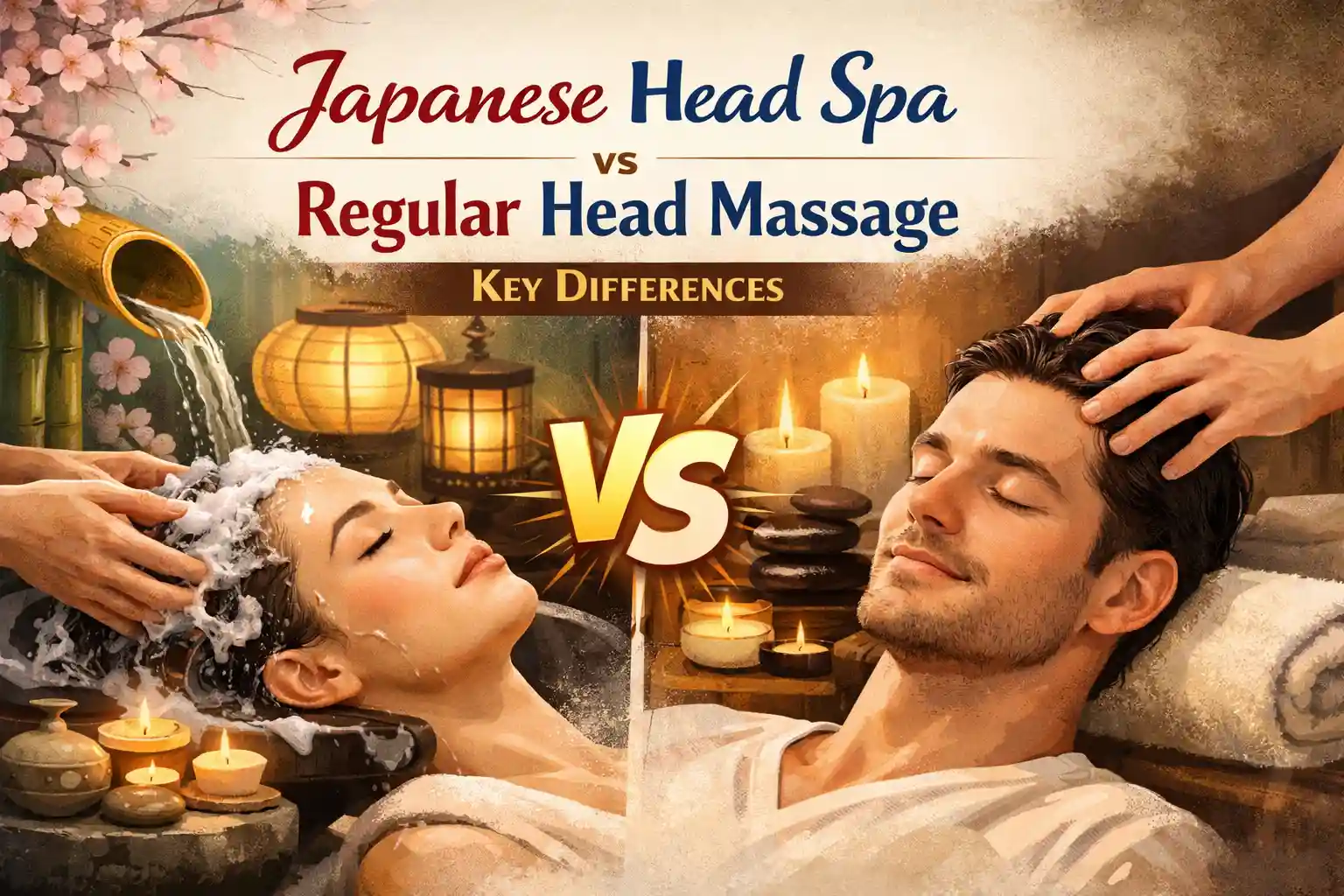
If you’ve been tracking wellness social media, you may have noticed the Japanese Head Spa trend everywhere–gentle scalp steaming, meandering water rinses, and calming aromatherapy helped by a deeply relaxing ritual that looks like a spa dream. On the other hand, despite everything, a classic head massage is one of the most reliable ways to melt stress and tension away—and feel better fast.
So, what’s the difference between a Japanese Head Spa and a typical head massage? And which is best for your scalp, hair, and stress levels?
What Is a Japanese Head Spa?
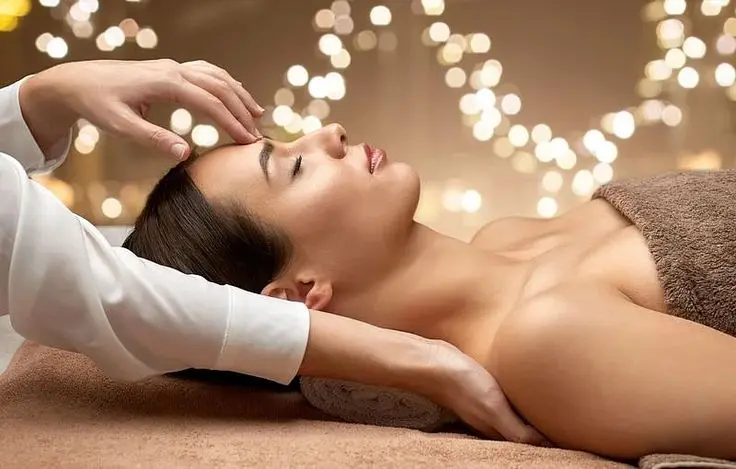
A Japanese Head Spa is a systematic head-to-hair ritual that introduces cleansing, scalp care, moisturising , and relaxation. Not your everyday massage. As opposed to just a good rub down, the head spa involves several product steps and water-based techniques that all work together to freshen up the scalp. Sort of like skincare for your noggin.
The typical offering at a Japanese head spa includes:
- A rapid scalp consultation (occasionally coupled with a scalp scan)
- Scalp detox, ridding of build-up and excess oils
- Light scrub or detox (depending on scalp)
- Apply a steam or a hot towel to comfort and help you open pores for better absorption
- Scalp mask or serum if you have dandruff, a dry scalp , or sensitive skin
- Japanese head massage ( neck and shoulders are also included ).
- Neutralizes yellow hair color & adds superior conditioning to the hair for slip and detangling.
The emphasis is on wellness and scalp hygiene — so you leave feeling calmer and visibly fresher at the roots.
What Is a Regular Head Massage?
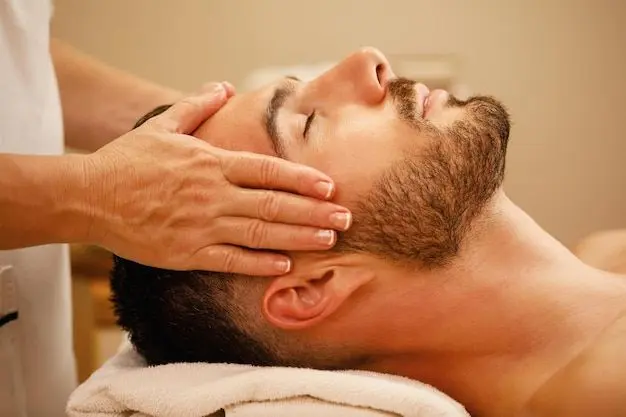
Regular head massage is a way of relaxing. It can be practiced in a salon, at a spa, or as a do-it-yourself treatment, and generally consists of manipulating a succession of pressure points on the scalp, temples, neck, and shoulders.
A head massage may include:
- Finger kneading across the scalp
- Pressure point work around the head and out of the base of the skull
- Free neck and shoulders from tightness
- Other optional oils or balms for better glide and to soothe the skin
The purpose here is not scalp detox or deep cleansing — it’s stress reduction and tension release.
Book a Japanese head spa in Delhi for a deep scalp detox and total stress relief in one spa session
The Main Difference in One Simple Idea
Here’s the clearest way to understand it:
- A Japanese Head Spa is a scalp treatment ritual & massage.
- Massage Head massage is a massage-based approach that avoids the multi-step scalp cleaning often emphasized.
That one variation alters how you feel post-practice — and what long-term effects you receive.
1) Technique Differences: Ritual-Based vs Massage-Only
Japanese Head Spa technique
The courses of action to take for a head spa are generally as follows. It combines the sensations of relaxation and improvement within your scalp. The session often includes:
- Scalp pore cleansing methods are specially designed to get your pores clean
- Calm the nervous, Slow water cleansing methods
- Steam to warm skin and open pores (for gunk-unblocking, oil-blackhead-clearing)
- Structured Japanese head massage style pattern that feels rhythmic and even
Because it’s step-based and guided, the sensation is often a more “full” feeling and immersive.
Regular head massage technique
An average head massage usually covers:
- Manual kneading for quick relaxation
- Temples and forehead for tension headache
- Skull base pressure (they say where a lot of people store stress).
- Release the shoulders and neck (great for desk posture)
It’s usually easier, shorter, and more flexible than a head spa in Japan.
2) Product and Scalp Care Differences
A large difference is the way each technique treats the scalp.
Japanese Head Spa products
Even the most traditional Japanese Head Spa practically treats your scalp like facial skin — and it uses products made specifically for the scalp, such as:
- Clearing cleansers to wash away oil, sweat, and product buildup
- Flaky skin (gentle, not abrasive) exfoliation steps
- Moisturizing Salon One-Step Hair Mask for dry, tight scalps
- Antioxidant serums for irritation, sensitivity , or itch
This is why a head spa is sought after for individuals with dandruff, oily roots, or even if you wash your hair but still think your scalp feels “dirty.”
Regular head massage products
A typical head massage might involve:
- Oils such as coconut, almond herbal oils.
- Smooth strokes for creams or balms
- Aromatherapy oils for relaxation
This can be really great, but it may not be for everyone. Indeed, some scalps can become greasier or itchier with too frequent oil use (if the dandruff is related to an oil imbalance on the scalp) or product buildup.
3) Results: What You Feel Right After
After a Japanese Head Spa
After a head spa, physical and visible effects will register with most:
- Cleaner, lighter scalp sensation
- Fresher roots and reduced greasiness
- Less itching or tightness (especially for dry scalp types)
- Das Haar ist durch die Reinigung und das Konditionieren weicher geworden
- A “reset” sensation akin to post-facial peace
The Japanese Head Spa is a powerful option if you seek relaxation and scalp benefits.
After a regular head massage
Regular head rubs typically provide quicker mental and muscular relief:
- Less tension in the scalp, neck, and jaw
- Headache relief for many people
- Higher sleep quality later that night
- A quieter mind and a lighter stress burden
If your main problem is stress, a head massage provides immediate relief.
4) Best Choice Based on Your Scalp Type
Your scalp type matters more than you might believe.
Opt for a Japanese Head Spa if you have:
- Frequent dandruff or flakes
- Itchiness or irritation
- Oily roots that return quickly
- A lot of product buildup from styling or dry shampoo, or hair sprays
- A scalp that feels “stuffy” or uncomfortable
Opt for a regular head massage if you:
- Tension headaches
- Screens, desk work, and life Tightness from screens, desk work, or stress
- Neck and shoulder stiffness
- Average scalp that does not require deep detox treatments
- Prefer non-rinsing service, simple
Something just as effective can be combining the two—using a head massage for weekly stress relief and a Head Spa, specifically in the Japanese style, for a monthly scalp reset.
5) Comfort and Experience Differences
Japanese Head Spa is meant to be a full ritual. All those factors create a calming sensory feedback loop that can help your nervous system switch into rest mode.
A head massage is regular therapy: hands-on pressure, targeted tension release, often much quicker if you’re carrying stress in your temples or the base of your skull.
If you are looking for a luxurious wellness experience that also nurtures scalp hygiene, it’s hard to beat a Japanese head spa. If you’re seeking quick relief and easy to move around, a head massage is the way to go.
6) Which One Is Better for Hair Growth?
Let’s not kid ourselves: neither will work miracles and make you grow a Bob Ross-looking head of hair, but some people achieve better results with one than the other. But both can help you maintain the healthiest possible scalp, which is key to good-looking hair.
A Japanese Head Spa can help to pave the way for healthier hair by:
- Removing buildup that blocks follicles
- Helps balance scalp (oil + hydration)
- By helping to soothe inflammation or itch that incites scratching
- Enhance the overall comfort of the scalp and make hair care easier
By indirect means: A daily massage of the head can be of indirect assistance by –
- Manual stimulation induces higher blood flow in parties where there is “cover” or manual points.
- Less stress (stress can affect hair shedding)
- Loosening stiff muscles in the tensed areas of the scalp, which can cause pain
If your hair fall is sudden, excessive, or patchy, it’s best to visit a dermatologist or trichologist. “But for general scalp health, a lot of people swear by the combo of head massage techniques from Japan and good old-fashioned scalp.
What to Expect in Your First Japanese Head Spa
If you’ve never experienced a Japanese Head Spa, here is how it generally feels:
- A quick consultation about dry scalp or oily, scaly skin
- Cleansing steps that are more cleansing than your average shampoo
- Relaxing and softening with steam or warm towels
- Relaxing massage to include scalp, neck, and shoulders
- Scalp mask or serum (whatever suits your needs at the moment
- — A slow rinse routine that many people love for its utter satisfaction
- Gently style or dry to complete
The major a-ha moment for first-timers is how clean and airless the scalp feels after it, without that almost desiccated dryness you might find from abrasive shampoos.
How to Choose the Right Option for You
Pick a Japanese Head Spa when you want:
- Deep scalp cleansing
- Dandruff/flake control
- Less oiliness and less itch
- A luxury “reset” experience
- Relaxation plus visible scalp freshness
Pick a regular head massage when you want:
- Quick tension relief
- Headache support
- Better sleep and mood
- A service you can repeat often
- A simple routine without water-based steps
If you’re unsure, here’s a smart approach: try a Japanese head spa once, then decide whether your scalp needs it monthly or occasionally—while using head massage more regularly for stress.
Final Thoughts
Between a Japanese Head Spa and a regular head massage, it’s not about which is the “best.” “What you’re doing is not so much about what needs to happen two years from now as it is about what your body and scalp need right now,” she says.
If your roots are feeling heavy, itchy, oily, or flaky (read: your roots aren’t at their healthiest), the head spa route provides that deep-clean, scalp-care treat with relaxation packed in. If your problem is simply stress, tension, headaches, and tight shoulders, see how quickly a classic head massage can put you back to normal.
Either way, both can make for an effective act of self-care. And if you love a bit of both, having a monthly Japanese Head Spa with periodic head massage is a ritual sworn by many.