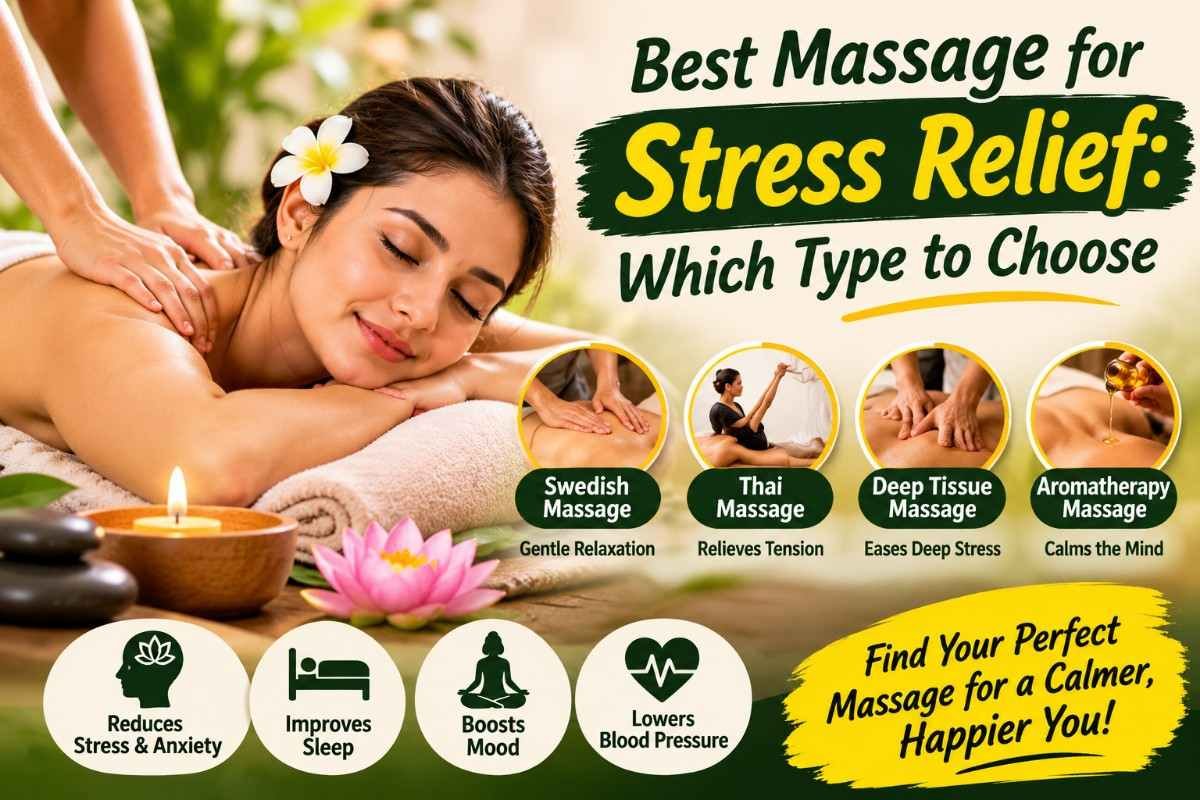
Stress does not stay in your head. It settles in your shoulders, tightens your jaw, shortens your breath, and makes sleep feel just out of reach. Many people in Delhi NCR recognise this pattern: a packed commute, back-to-back meetings, a phone that never stops buzzing, and a body that quietly pays the price.
A good massage is one of the most enjoyable ways to interrupt that cycle. But walk into a spa, and the menu can feel confusing. Swedish, aromatherapy, hot stone, Ayurvedic, Thai, deep tissue: which one is actually right for a stressed mind and a tired body?
This guide compares the most popular options, explains how each one feels, and helps you match a style to your situation, so you spend your hour on what you really need.
How Stress Shows Up in the Body
Before choosing a treatment, it helps to know what you are treating. Stress commonly appears as:
- Tight neck, shoulders, and upper back
- Clenched jaw or tension headaches
- Shallow, fast breathing
- Restless sleep or difficulty switching off at night
- Fatigue that rest does not seem to fix
- A short temper or a constant “wired” feeling
When you feel under pressure, your body stays in a state of alert. Muscles stay contracted, breathing turns shallow, and it becomes hard to settle. The goal of a relaxing session is to nudge your body in the opposite direction: slower breathing, softer muscles, and a quieter mind.
How Can Massage Help with Stress?
Research suggests that massage may help people feel less tense and anxious, at least in the short term, though studies vary in size and quality. What most guests report is simple and familiar: after a session, they feel calmer, their muscles feel softer, and their thoughts slow down.
Several things work together to create that effect:
- Touch and rhythm. Slow, predictable strokes tend to feel soothing and signal safety to the body.
- Muscle release. Easing tight areas reduces the physical discomfort that feeds mental tension.
- Breathing. Lying still in a quiet room naturally encourages deeper, slower breaths.
- A break from screens. An hour without notifications is a rest for the mind in itself.
- Environment. Soft lighting, gentle music, and pleasant aromas help the nervous system settle.
Massage is a supportive wellness practice, not a medical treatment, so think of it as one helpful tool alongside sleep, movement and good boundaries.
The Main Types of Massage for Stress Relief
Here is how the most popular styles compare for relaxation.
1. Swedish Massage: The Best All-Rounder
Swedish massage uses long, gliding strokes, light kneading, and gentle circular movements, usually with warm oil. The pressure is light to medium, and the rhythm is slow and steady.
Best for: First-timers, people who feel generally frazzled, and anyone who wants pure relaxation without intense pressure.
Keep in mind: If your muscles are very knotted, you might find it too gentle. In that case, a firmer style may suit you better. Our breakdown of deep tissue vs Swedish massage explains the difference in detail.
2. Aromatherapy Massage: For Mood and Evening Wind-Down
This style pairs light to medium pressure with essential oils such as lavender, chamomile, or sandalwood. The scent is part of the experience, and many people find it makes the session feel more calming.
Best for: Mental tiredness, evening appointments, and people who love a spa-like atmosphere.
Keep in mind: Tell the therapist about any allergies or sensitive skin, and ask for a patch test or milder oils if needed.
3. Ayurvedic Oil Massage (Abhyanga): Grounding and Nourishing
Abhyanga is a traditional Indian practice that uses generous amounts of warm oil, applied with rhythmic strokes across the body. The slow pace and warmth feel deeply comforting and grounding.
Best for: People who feel scattered, run-down, or dry-skinned, especially in the cooler months.
Keep in mind: It is oil-heavy, so plan time for a shower afterwards. You can read more in our guide to Abhyanga massage for working professionals.
4. Hot Stone Massage: Warmth That Melts Tension
Smooth, heated stones are placed on the body or used by the therapist as massage tools. The warmth helps muscles loosen, so the therapist can work comfortably without heavy pressure.
Best for: Cold, stiff, or tense muscles, and people who love heat.
Keep in mind: Heat is not suitable for everyone, so mention any circulation issues, skin sensitivity or medical conditions beforehand. For a closer comparison, see aromatherapy vs hot stone massage.
5. Head, Neck and Shoulder Massage: The Quick Reset
If stress lives in your upper body, a focused session on the scalp, neck and shoulders can be remarkably effective. It is shorter, often more affordable, and easy to fit into a busy day.
Best for: Desk workers, screen-heavy days, and tension that gathers around the head and neck.
Keep in mind: It will not address tension in the lower back or legs. Learn more in our guide on what a head massage involves, or see how it compares with a trendy Japanese head spa. If your neck is the main culprit, our article on the best massage for neck and shoulder pain is a useful next read.
6. Thai Massage: For the Wound-Up, Restless Type
Instead of lying still while oil is applied, you stay clothed on a floor mat while the therapist combines rhythmic pressing with gentle assisted stretches. It feels more active, and some people find that it releases restless energy better than a very slow massage.
Best for: People who feel “wired”, stiff or cooped-up, and who prefer to stay dressed and avoid oil.
Keep in mind: It involves stretching and firmer pressure, so check with your doctor first if you have injuries, bone concerns or are pregnant.
7. Deep Tissue Massage: When Stress Has Turned Into Knots
This style uses slow, firm pressure to reach deeper layers of muscle. It is more of a “release” than a “pamper” session, but when stress has created stubborn knots in the back and shoulders, it can feel like a relief.
Best for: Chronic tightness, heavy desk work, and gym-related stiffness.
Keep in mind: It can leave you slightly sore the next day, and it is not the most relaxing choice if your main goal is to drift off. Our article on the benefits of deep tissue massage covers who it suits and what to expect.
8. Foot Reflexology: Gentle and Simple
This involves focused pressure on the feet, which many people find surprisingly relaxing after a long day on their feet. It is a good option if you are short on time or prefer a lighter treatment.
Best for: Tired feet, short breaks, and first-time visitors who are not ready for a full-body session.
Quick Guide: Which Massage Should You Choose?
Still unsure? Match your situation to a style:
- “I am overwhelmed and just want to switch off.” Choose Swedish or aromatherapy.
- “I cannot sleep.” Try an evening aromatherapy or Ayurvedic oil session.
- “My neck and shoulders are rock hard from work.” Choose a head, neck and shoulder massage, or deep tissue if you like firm pressure.
- “I feel restless and cannot sit still.” Consider a Thai-style session.
- “I am cold, tired and run-down.” Hot stone or Ayurvedic oil massage.
- “I have only 30 minutes.” A focused head and shoulder session or foot reflexology.
- “I am not sure at all.” Book a 60-minute full body session and ask the therapist to adapt the pressure.
If you want a broader look at a complete session, see our page on full body massage.
How to Get the Most Relaxation from Your Session
The style matters, but so do the small details. A few habits can make your hour much more effective:
- Choose a calm time slot. Avoid squeezing a massage between two meetings. Leave a buffer afterwards.
- Switch off your phone. If you are going to rest, truly rest.
- Speak up about pressure. Light, medium, or firm is your choice, and you can change it at any time.
- Breathe slowly. Long exhales help your body let go.
- Skip heavy meals and caffeine just before your session, since both can make it harder to relax.
- Drink water afterwards and take a few quiet minutes before jumping back into your day.
First time at a spa? Read our guide on what to expect before your first luxury spa visit to feel fully prepared.
How Often Should You Book a Relaxation Massage?
There is no single answer. Many people find that a session every two to four weeks helps them stay on top of everyday stress, while others book one after demanding periods such as deadlines, travel, or the festive-season rush. A useful rule of thumb is to book before you reach breaking point, not after.
Pairing massage with simple daily habits multiplies the benefit: a short walk, consistent sleep hours, stretch breaks at your desk and a few minutes of slow breathing. For more ideas on how professional treatments fit into a balanced routine, read our article on how massage centres in Delhi help you beat stress.
When Massage Is Not Enough
A relaxing session can help you feel better for a while, but it cannot replace professional care when stress becomes overwhelming. Please speak to a doctor or qualified mental health professional if you notice:
- Anxiety, panic or low mood that lasts for weeks
- Trouble sleeping most nights
- Loss of interest in activities you usually enjoy
- Physical symptoms such as chest pain, dizziness or severe headaches
- Feeling unable to cope with daily responsibilities
Also check with your doctor before booking if you are pregnant, have a recent injury, a skin condition, high blood pressure, or any ongoing medical issue, and always share these details with the spa.
What to Look for in a Spa
A relaxing experience depends on the setting as much as the technique. Look for:
- Trained therapists who listen to your needs and respect your limits
- A private, quiet room where you can fully let go
- Clean linen, fresh towels and a hygienic space
- Transparent information on treatment length, inclusions and cost
- Flexibility to adjust pressure, music and room comfort
At Luxury Body Spa, you can choose from a range of relaxation-focused therapies in a clean and private setting. Available treatments can differ by outlet, so please confirm your preferred style when booking. You can view our spa prices and packages or find the closest branch on our outlets page.
Conclusion
There is no single “best” style for everyone. Swedish and aromatherapy are the safest choices for pure relaxation, Ayurvedic oil massage and hot stone work well when you feel cold and drained, head and shoulder sessions suit desk-heavy days, Thai-style work suits restless bodies, and deep tissue helps when stress has turned into stubborn knots.
The most useful step is to notice where your stress sits and pick the treatment that meets it. If you are still unsure, start with a 60-minute session, tell the therapist how you feel, and let them guide the pressure and pace.
Book Your Relaxation Session on WhatsApp
Note: This article is for general wellness information. Massage supports relaxation but does not replace medical advice, diagnosis, or treatment.
FAQs
Which massage is best for stress and anxiety?
Swedish and aromatherapy massage are the most popular choices because of their slow, gentle rhythm and calming atmosphere. If you feel physically tight, a medium-pressure full body session may suit you better. For ongoing anxiety, please also speak to a healthcare professional.
How long should a stress-relief massage be?
Sixty minutes is a good starting point for most people. If you want to feel fully unwound, 90 minutes gives the therapist more time to work slowly without rushing.
Can massage lower stress hormones?
Some studies suggest that massage may be linked with lower levels of stress hormones, but results vary between studies. What is clearer is that many people report feeling calmer and more relaxed afterwards.
Is a firm massage better for stress?
Not necessarily. Firm pressure helps with deep muscle tension, but light to medium pressure is often more relaxing when your goal is to calm the mind. Choose the pressure that feels comfortable, not the one that feels strongest.
Can I get a massage if I have trouble sleeping?
A relaxing session, especially in the evening, may help you wind down before bed. It is not a treatment for sleep disorders, so consult a doctor if poor sleep continues.
How soon will I feel the effects?
Most people feel calmer during or right after a session. The effect may last a day or two, and regular visits can help you manage everyday pressure better over time.
What should I avoid before a relaxation massage?
Avoid a heavy meal, alcohol, and too much caffeine before your appointment. Arrive a few minutes early so you are not rushing in already tense.
Is it normal to feel emotional or sleepy after a massage?
Yes. Feeling very relaxed, sleepy, or even a little emotional is common when the body lets go of tension. Drink some water, rest if you can, and go gently for the rest of the day.