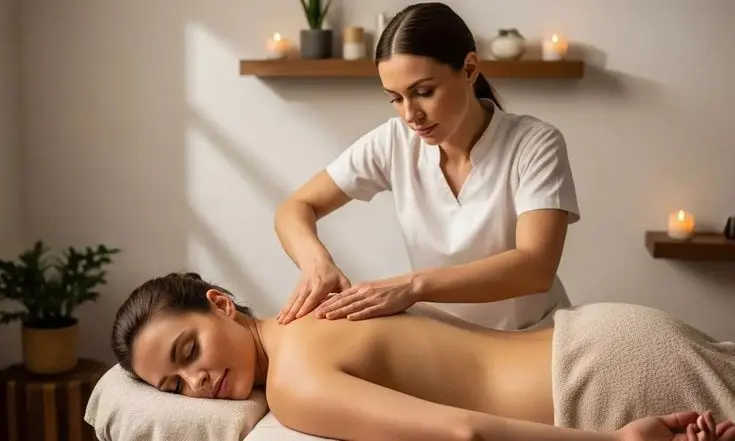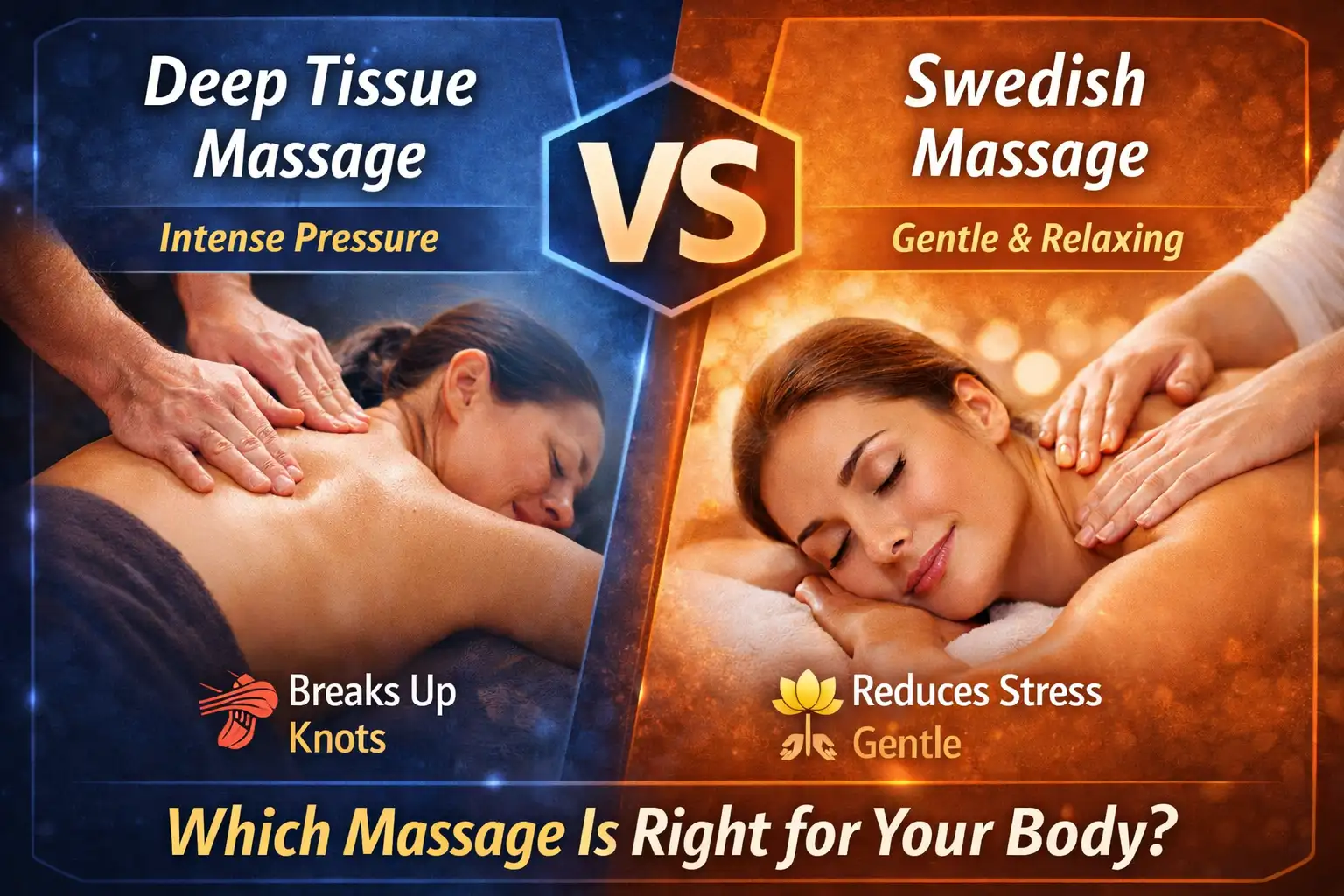
No big deal, right? Massage is pretty straightforward: You lie down, relax, and feel better. But when you try to book a massage, you see all the options—like Deep Tissue and Swedish—and you don’t know which is best.
The fact is, they both make a difference—but for different reasons. One is like a slow, soothing reset for your mind and body. The other is akin to “repair work” for tight muscles and pain.
In this comprehensive and unique guide, you will find an in-depth exploration of deep tissue massage and Swedish massage, including their definitions, the real benefits of deep tissue massage, and more. The book caters to wannabe yoga followers who have a preference for the Indian lifestyle since they may need more information about such lifestyle topics as long sitting hours, travel fatigue, gym soreness, stress, etc.
What is a Swedish massage?
Swedish massage is a common, popular form of massage that emphasises relaxation and circulation. It involves long, flowing strokes and gentle kneading. The pressure is light to medium, and the session has a smooth, calming feeling.
Common Swedish Techniques
- Long strokes to relax the body
- Kneading to soften mild tightness
- Circular rubbing around stiff areas
- Light tapping (sometimes) to wake up muscles
- Gentle stretching to improve flexibility
This massage is perfect when your stress is mental/emotional, and you want to feel light.
Benefits of Swedish Massage

When people look for the benefits of Swedish massage, these are generally the results they have an interest in:
1) Helps you relax deeply
Swedish massage gives a strong “literally, let’s calm down” signal to your nervous system. It’s wonderful after a busy week, a long travel, or sleep deprivation.
2) Reduces daily stiffness
If you’ve got mild neck, shoulder, or low back pain (the hallmark of a desk job), Swedish massage is the way to go for loosening up your tightened muscles without making you sore.
3) Improves blood circulation
The strokes promote excellent circulation and blood flow, which helps relieve muscle discomfort and promote recovery as a whole.
4) Helps with fatigue and a “heavy body” feeling.
Many people feel more energised and rejuvenated after a Swedish session—particularly if they’ve been stationary for hours on end.
5) Supports better sleep
Swedish People that find it difficult to fall asleep as a result of anxiety or racing thoughts generally feel much calmer at bedtime after receiving a Swedish massage.
Looking for a spa in Delhi? Experience premium relaxation at our Luxury Body Spa with luxury ambience, expert therapists, and soothing massage therapies.
Health Benefits of Swedish Massage
The health benefits of Swedish massage are mostly linked to long-term stress management and body maintenance:
- Helps the body shift from stress mode to relaxation mode
- Supports muscle recovery by improving circulation
- Helps maintain flexibility (especially if you do yoga or walking)
- Can reduce stress-related tension headaches in some people
- Supports general wellness routines for a modern lifestyle
Swedish massage is also a safe “first massage” for beginners.
What Is Deep Tissue Massage?
Deep tissue massage technique involves slower, stronger strokes to target the deeper layers of muscle and connective tissue (fascia). It focuses on difficult knots and chronic tightness that tend to accumulate from bad posture, injuries, or repetitive stress.
This isn’t “pressing hard for the sake of pressing hard.” “I’m trying to get into anything that’s not breaking up with a light massage.
Deep Tissue Techniques (easy to understand)
- Slow strokes with firm pressure
- Sustained pressure on knots (trigger points)
- Working along muscle fibres to release tightness
- Fascia release to reduce “stuck” feeling in muscles
Benefits of Deep Tissue Massage

When people seek deep tissue benefits, they are generally in some kind of pain or discomfort due to their body being too constricted. Here are practical benefits:
1) Deep muscle knot release
If the “hard lumps” are located in the shoulder, upper back, or calf, deep tissue massage directly targets those areas.
2) Helps posture-related pain
Deep tissue would help if you sit for long hours and have rounded shoulders, a stiff neck, or a tight lower back.
3) Helps gym and sports recovery
For gym-goers and runners, those who dance, and those who do physical labour, deep tissue helps relieve muscle tightness and stiffness.
4) Improves mobility
The deep tissue can help you move better when tight muscles are limiting movement, such as with tight hamstrings, which can affect the lower back.
5) Targets chronic tightness
And if you have a specific area that always feels tight (say, one shoulder or one hip), deep tissue focuses more directly than Swedish does.
Health Benefits of Deep Tissue
The health benefits of deep tissue are often connected to pain relief and better body function:
- Supports long-term muscle tightness management
- Helps reduce stiffness that affects daily movement
- Can support rehabilitation routines (with therapist guidance)
- Helpful for people with recurring muscle pain from work strain
- Encourages better body awareness (you learn where you hold tension)
Deep Tissue Massage for Pain Relief: When It Makes the Most Sense
A major reason people choose it is for deep tissue massage for pain relief. It can be suitable if you deal with:
- Lower back pain due to long sitting
- Neck and shoulder pain from laptop/phone posture
- Upper back tightness (between shoulder blades)
- Leg tightness after walking, gym, or standing for long hours
- Chronic knots that keep returning
After deep tissue, minor soreness for 24–48 hours will be normal. It’s similar to post-workout soreness. Hydrate, do a light stretch, and steer clear of the heavy gym right away.
Deep Tissue vs Swedish Massage: Comparison in a Unique, Easy Format
1) What do you feel during the massage
- Swedish: smooth, relaxing, comfortable
- Deep tissue: intense, focused, sometimes slightly uncomfortable on knots
2) Best purpose
- Swedish: stress relief, relaxation, better sleep
- Deep tissue: pain relief, stiffness reduction, knot removal
3) Best for Indian lifestyle issues
- Swedish: work stress, travel fatigue, mild body pain
- Deep tissue: posture pain, gym soreness, long-term tightness, chronic back/shoulder pain
4) After-effects
- Swedish: calm and refreshed
- Deep tissue: relaxed but may feel sore for 1–2 days
Searching for a spa in Noida? Visit our Luxury Body Spa for a clean, calming space, professional care, and a truly refreshing spa experience.
Which One Should You Choose? (Decision Guide)
If you’re confused, use this simple checklist.
Choose Swedish massage if:
- You feel stressed, anxious, or mentally drained
- You want relaxation more than pain treatment
- Your pain is mild and mainly due to tension
- You want to improve sleep and overall comfort
- You are new to massage
Choose deep tissue massage if:
- You have stubborn knots and chronic tightness
- You want a deep tissue massage for pain relief
- You work out regularly or do physically heavy work
- You have posture-related pain (neck/shoulder/back)
- You want targeted work rather than full-body relaxation
A Smart Option: Combination Massage
A “unique” and often best approach is a mixed session:
- Start with Swedish techniques to warm up muscles
- Use deep tissue only on problem areas like the neck, shoulders, and lower back
- End with Swedish strokes again for relaxation
This gives you both benefits—relaxation + pain relief—without making the entire session intense.
Tips to Get Better Results
1) Don’t chase extreme pressure
More pressure doesn’t always mean better results. Deep tissue should feel “productive,” not unbearable.
2) Tell your therapist your pain scale
Use a simple scale:
- 1–3 = light
- 4–6 = good pressure
- 7–8 = intense but manageable
- 9–10 = too much (tell them to reduce)
3) Plan your session timing
- Swedish is perfect even during a busy week
- Deep tissue is best when you can rest afterwards (like a weekend evening)
4) Hydrate and stretch lightly
This helps your muscles recover better, especially after deep tissue.
Conclusion
Deciding between Deep Tissue vs Swedish Massage is actually a matter of your body’s need at the time. If you’re looking for a soothing massage that will help take away stress, improve circulation, and support sleep, then we believe Swedish is a safe bet with the benefits of a Swedish massage and long-term health benefits from a Swedish massage.
If your primary objectives are treatment-based and you are trying to treat chronic tightness, stubborn knots, or various deep tissue massages for pain relief needs, then Deep tissue can have more therapeutic value, and the power traits of deep tissue massage are on a recommendation if communication is clear and appropriately experienced.