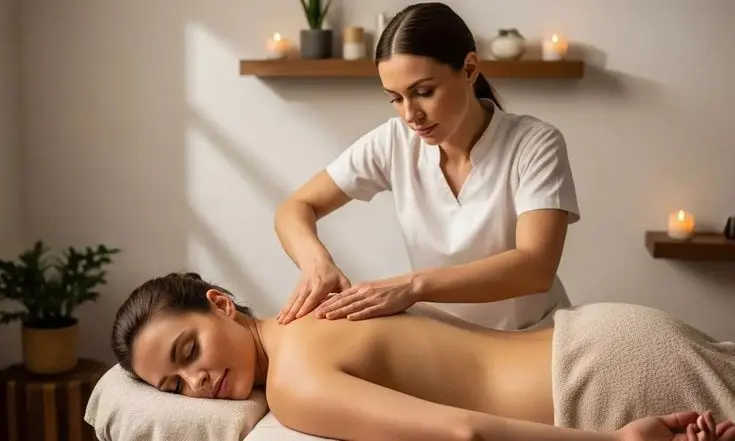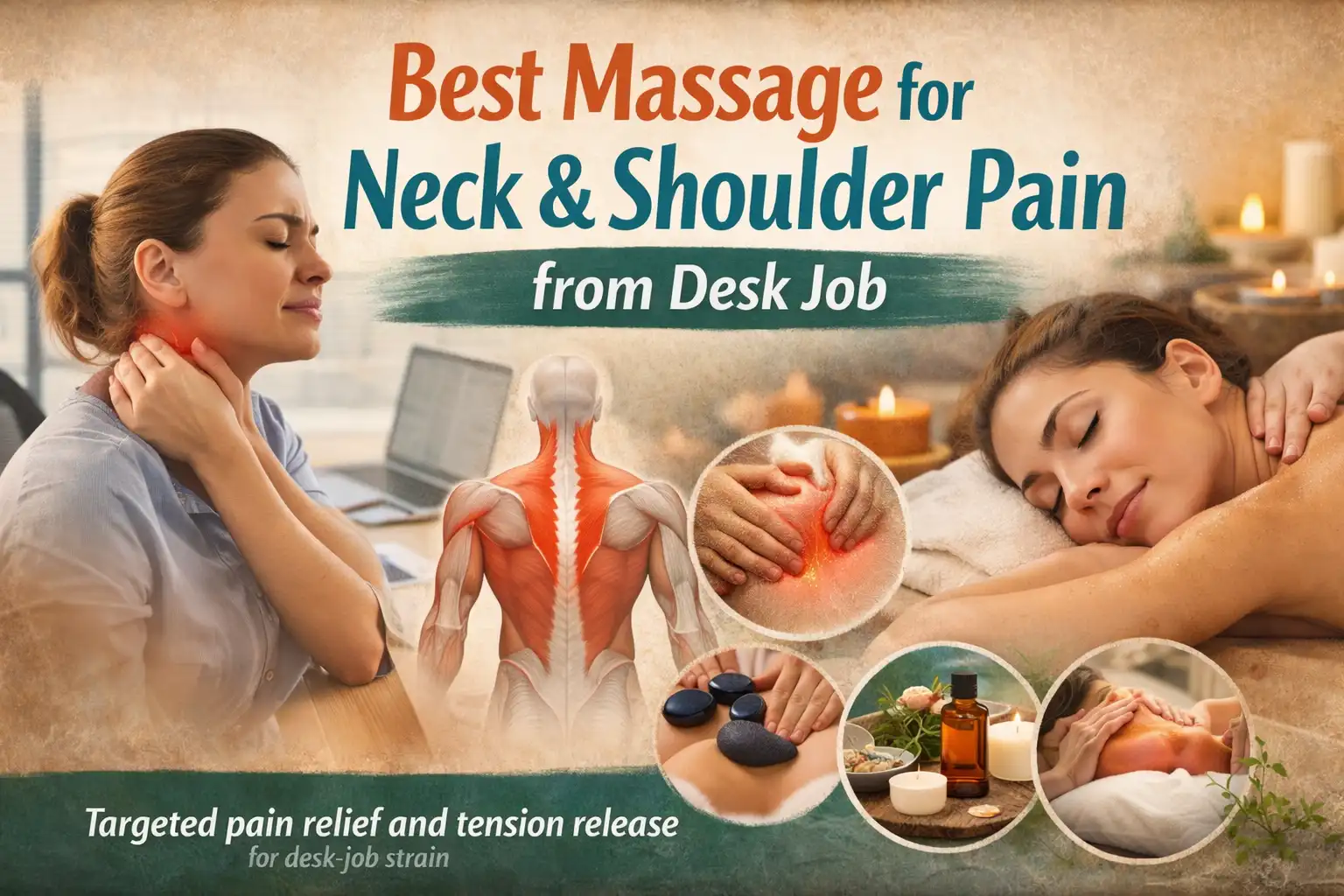
If you’re someone who works on a laptop or sits at a desk all day, you’ve likely felt it: tight shoulders that creep up to your ears, a neck that feels like it doesn’t turn, headaches creeping up from the base of the skull, and/ or an unrelenting feeling of “heaviness” across your upper back. This is one of the most common issues among people who work in offices, students, and anyone who spends hours staring at screens.
The good news is that the best massage for neck pain and massage for shoulder pain will help decrease tension, increase your range of motion, and have you feeling lighter on your feet by getting rid of the root cause. In this guide, you’ll discover the best types of massage for desk-job pain, why it happens in the first place, what to expect during a session, and easy strategies to help ease relief last longer.
Why Desk Jobs Cause Neck and Shoulder Pain
Neck and shoulder pain is frequently gradual in onset. Sometimes it’s not even one big injury — it is the drip, drip, drip of the strain caused by posture and stress.
Common desk-job triggers
- Forward head posture: your head shifts in front of your shoulders while looking at a screen
- Rounded shoulders: shoulders roll inward, tightening the chest and upper traps
- Static sitting: holding the same position for hours reduces blood flow and stiffens muscles
- Stress tension: anxiety or deadlines often make you “hold” tension in the neck and shoulders
- Poor workstation setup: screen too low, chair without support, keyboard too far away
Simply put, over time, the muscles in your upper back, shoulder, and neck get worked far too hard. This is why you may get knots in your upper trapezius, feel tight between the shoulder blades, and be sore at the base of your neck.
What Type of Massage Is Best for Desk-Job Pain?

The best massage for pain relief in the neck and shoulders is going to depend on your level of pain and what is causing the tightness. For most, it’s some combination of work that helps you relax and unwind the nervous system or targeted work to help areas knock out tightness.
Below are the most effective options.
1) Deep Tissue Massage (Best for Stubborn Knots)
And if you have regularly recurring tight, painful knots, deep tissue massage is often the most popular choice for both neck and shoulder pain.
Why it helps
Deep tissue Deep tissue massage applies slow, firm pressure to reach deeper muscles and body structures. It’s especially helpful for:
- chronic tight upper traps (the “stress muscles”)
- stiff neck from posture strain
- tight areas around the shoulder blades
- limited range of motion
Best for
- desk workers with long-term tightness
- people who feel “stuck” in the shoulders
- Recurring knots in the upper back
Tip: Deep tissue work should be intense, but never sharp or painful. The most effective pain relief occurs when your body can still melt into the pressure.
2) Trigger Point Therapy (Best for Referred Pain and Headaches)
Trigger points are congested muscle “knots” that can refer pain elsewhere. For example:
- a knot in the upper shoulder can refer pain into the neck
- Trigger points near the base of the skull can contribute to headaches
When your neck pain radiates or feels bewildering, one of the best massages for neck pain is trigger point therapy.
Why it helps
The therapist applies focused pressure to specific points until the muscle releases. This can:
- reduce sharp tightness
- improve mobility quickly
- decrease tension headaches
Best for
- people who get headaches from neck tension
- pain that radiates into the head, arm, or upper back
- very specific “hot spots” that hurt when pressed
Looking for the best spa in Delhi? Relax with expert massage therapies that melt stress and leave you feeling refreshed and recharged.
3) Swedish Massage (Best for Stress-Related Tension)
“Deep knots” represent only a subset of desk-job pain. Sometimes it’s your nervous system — staying in stress-all-day mode, tight shoulders and shallow breathing and jaw tension, and a stiff neck that doesn’t appear to have an actual knot in it.
If that’s your goal, then a Swedish massage may be the best sort of pain relief massage for you because it slows down the whole frickin’ system.
Why it helps
Swedish massage uses long strokes and moderate pressure to:
- improve circulation
- reduce overall muscle tension
- calm stress and nervous system overactivity
Best for
- mild to moderate neck/shoulder tightness
- stress-related tension
- people new to massage
- those who don’t tolerate deep pressure
Pro tip: Request a Swedish massage that will place more attention on neck, shoulders, and upper back — this is a good “middle path” for many.
4) Myofascial Release (Best for “Tight and Stiff” Feeling)
Myofascia is the connective tissue that covers muscles. When it feels tight (as is common when you’ve been sitting for a while), you can feel bound up, stiff, and “compressed” around the shoulders, upper back.
Myofascial release involves slow, steady pressure and stretching of the muscles.
Why it helps
- release stiffness without aggressive pressure
- improves movement and posture
- reduces the feeling of tight “armor” around the shoulders
Best for
- stiffness without sharp pain
- people sensitive to deep tissue work
- long-term posture tension
5) Sports or Therapeutic Massage (Best for Active Desk Workers)
If you sit all day but also exercise, your body often holds a combination of posture strain and training fatigue. A therapeutic or sports massage technique may comprise:
- targeted deep work where needed
- stretching and mobility techniques
- recovery-focused pressure
If your pain is caused by sitting as well as exercise, this can be a great best pain relief massage to start with.
What to Ask for During Your Massage Session
If you really want to loosen knots, book “any massage.” Use clear requests. Quick and easy things to say:
- “I need a massage for neck pain from desk work—please focus on upper traps, neck, and shoulder blades.”
- “I get knots at the top of my shoulders—can you do trigger point work, but keep it within comfortable pressure?”
- “My shoulders feel rounded and tight—can you include chest/pec release and upper back work?”
- “I want pain relief, but not extreme pressure—please check in with me during deep work.”
A decent therapist will also inquire about your daily routines, where you are feeling achy, and what type of pressure you prefer.
What Areas Should Be Worked for Desk-Job Neck & Shoulder Pain?

For the most effective use, massage should not be restricted to the neck alone. The desk posture impacts a ring of muscles.
Key areas to include
- Upper trapezius: top of the shoulders
- Levator scapulae: often a major neck pain culprit
- Rhomboids and mid-back: between the shoulder blades
- Suboccipitals: base of skull (tension headaches)
- Pectorals (chest): tight chest pulls shoulders forward
- Scalenes (side neck): can feel tight with shallow breathing
All of these categories working on this full “upper body posture chain” are essential when it comes to a shoulder pain massage.
How Many Sessions Will You Need?
It depends on how long you’ve had the pain.
- Mild tension (recent): 1–2 sessions may feel significantly better
- Chronic tightness (months/years): weekly or bi-weekly sessions for a few weeks, then maintenance monthly
- Severe tightness + headaches: a focused plan (trigger point + posture changes) works best
Sure, massage helps, but ultimately, a better back is achieved through the practice of daily posture habits.
Searching for a premium spa in Dwarka? Experience a serene environment with expertly crafted massages tailored for deep relaxation and targeted pain relief.
Aftercare Tips: Make Your Massage Results Last Longer
A massage is a great thing, but if you return to the same posture for 10 hours, tightness comes flooding in quickly. Employ the following simple habits to safeguard your gains:
1) Adjust your screen height
Your screen should be near eye level so you’re not bending your neck forward.
2) Take micro-breaks
Every 45–60 minutes:
- roll your shoulders
- Stand for 30 seconds
- stretch your chest and upper back
3) Hydrate and move gently
After a deep session, drink water and take a light walk. This helps your body recover.
4) Try a 60-second daily stretch
- doorway chest stretch
- slow neck side stretch
- shoulder blade squeezes
These small actions can extend the effects of your best pain relief massage dramatically.
DIY Massage (Quick Relief at Home)
Massage therapy is best, but these quick options help between sessions:
- Tennis ball on upper back: lean against a wall and roll gently
- Heat on shoulders: a warm pack for 10–15 minutes can relax muscles
- Self-neck release: gentle pressure on the upper traps while breathing slowly
- Foam roller for upper back: roll mid-back (avoid rolling directly on neck)
When you get numbness, tingling, sharp pain, or symptoms going down the arm, then maybe it’s time to check with a healthcare professional.”
Final Thoughts: Best Massage for Desk-Job Neck & Shoulder Pain
Fortunately, neck and shoulder pain is a prevalent condition caused by the stress of desk work — but it shouldn’t be something you have to get used to. The right massage for neck pain and massage for shoulder pain can dissolve knots, increase the range of motion, diminish headaches and make your body feel balanced once more.