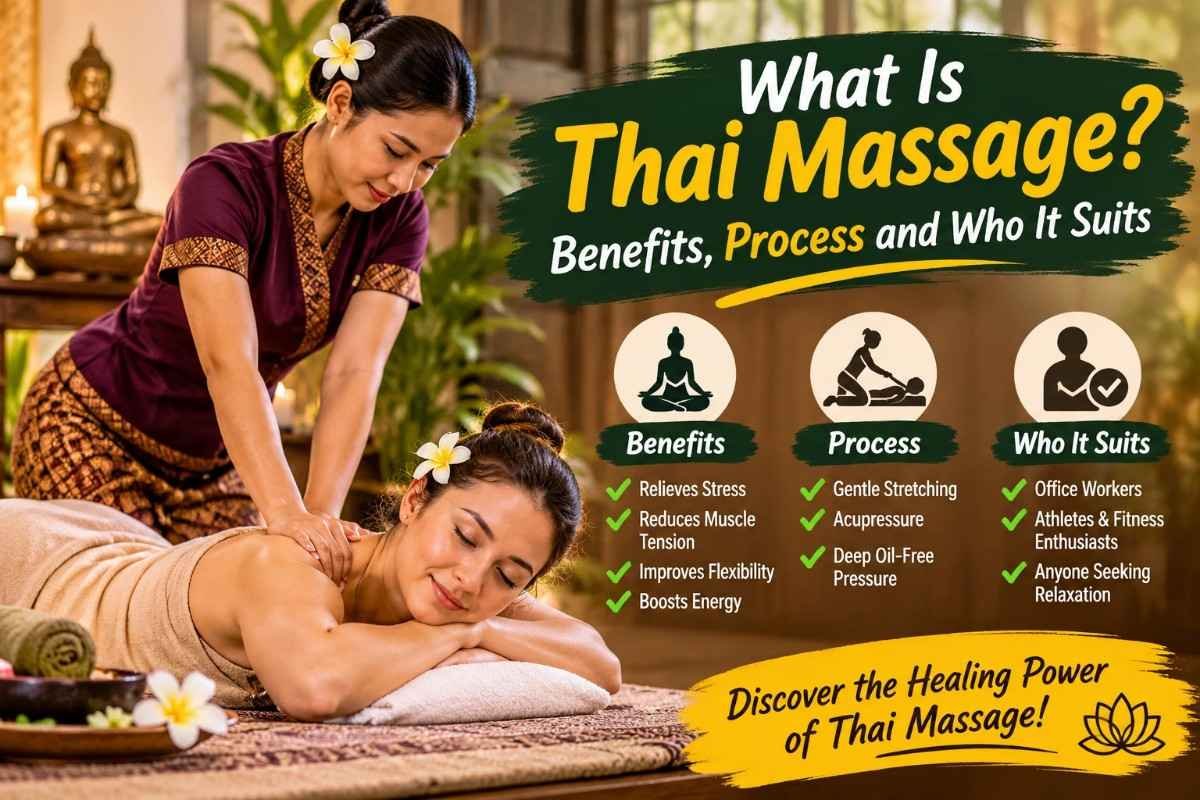
If you have ever watched a therapist lean into a client’s back with their forearms while gently guiding a leg into a stretch, you have seen Thai massage in action. It looks a little like a guided yoga session, and that is exactly why so many people across Delhi NCR are curious about it.
Unlike a classic oil massage, this style is done on a floor mat, with you fully clothed, and it combines rhythmic pressure with slow, assisted stretches. It is popular with desk workers, gym-goers, and anyone whose body feels stiff after a long week.
In this guide, you will learn what the therapy is, where it comes from, how a session unfolds step by step, the benefits people commonly report, and who it suits best. We also cover who should check with a doctor first, so you can book with confidence.
What Is Thai Massage?
Thai massage, known in Thailand as Nuad Thai, is a traditional bodywork practice that blends acupressure-style pressing, assisted stretching, and gentle rocking movements. Many people describe it as “lazy person’s yoga” because the therapist moves your body into each stretch while you stay relaxed.
The practice has been shaped over many centuries. It is commonly traced back to ancient India and Buddhist teachings, which travelled to Thailand and slowly developed their own character. Traditional accounts link its origins to Jivaka Kumarbhacca, a physician associated with the Buddha, and the famous Wat Pho temple in Bangkok became an important centre for preserving the knowledge. In 2019, UNESCO added Nuad Thai to its list of the Intangible Cultural Heritage of Humanity, recognising its cultural value.
At the heart of the tradition is the idea of sen lines, invisible pathways through which energy is believed to flow. Therapists apply pressure along these lines to encourage the body to release tension. Whether or not you follow the energy concept, the practical result is a structured sequence of pressing, stretching, and mobilising that works through the whole body.
How Is It Different from Other Massages?
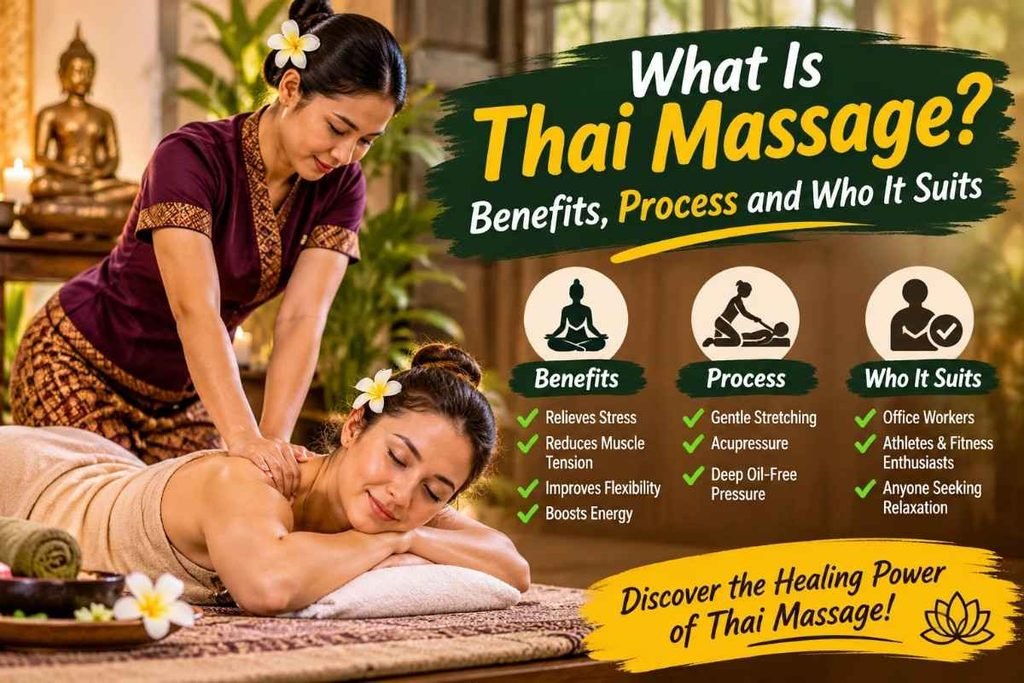
If you have only tried oil-based massages before, a Thai session feels quite different. Here are the main differences:
- Setting: You lie on a padded mat or low mattress on the floor rather than a raised massage table.
- Clothing: You wear loose, comfortable clothes, so there is no need to undress.
- Oil: Little or no oil is used, because the therapist works through your clothing.
- Movement: You are guided through stretches, whereas many other styles are mostly kneading while you lie still.
- Tools: The therapist uses palms, thumbs, forearms, elbows, knees, and sometimes feet to apply pressure.
- Feel: The rhythm is flowing and active, so many people feel energised rather than sleepy afterwards.
If you want to compare it with the two most common oil-based styles, our guide to deep tissue vs Swedish massage explains how they differ in pressure and purpose. For those who feel locked-up muscles are the main problem, the benefits of deep tissue massage are worth reading too.
Key Techniques Used in a Session
A trained therapist combines several techniques during one session:
- Palm and thumb pressing: Steady, rhythmic pressure along the legs, back, arms and shoulders.
- Assisted stretching: Gentle stretches for the hips, hamstrings, back and shoulders, held for a few breaths.
- Compression: Slow, controlled pressure using forearms, elbows or knees on larger muscle groups.
- Rocking movements: Soft, repetitive swaying that helps muscles let go.
- Joint mobilisation: Light movements of the ankles, wrists, neck and shoulders to improve comfort.
A good therapist always adjusts pressure and stretch depth to your comfort. You should feel a pleasant pull or pressure, never sharp pain.
Benefits People Commonly Report
Here are the benefits most people mention after a session:
1. Eases Muscle Tightness and Everyday Stiffness
Long hours at a desk, driving, or standing can leave muscles feeling tight. The combination of pressing and stretching targets large muscle groups, which many people find helps them feel looser and more comfortable.
2. Supports Flexibility and Range of Movement
Because stretching is built into the routine, regular sessions may help you move more freely. Many guests say that simple actions like bending, reaching, or turning the neck feel easier afterwards.
3. Encourages Relaxation and Calm
The slow rhythm, deep breathing, and focused attention can help you switch off from daily pressure. Time away from screens and notifications is a benefit in itself.
4. May Support Circulation
Pressing and releasing movements may encourage healthy blood flow, which is one reason the body often feels warm and light after a session.
5. Helps with Posture-Related Discomfort
Rounded shoulders and a stiff neck are common among people who work on laptops. Stretching the chest, hips, and back may help ease the strain that builds up from sitting. For a deeper look at this problem, read our article on the best massage for neck and shoulder pain from a desk job.
6. Leaves You Feeling Refreshed and Energised
Since you are an active participant, many people leave feeling more awake than after a heavy, sleepy oil massage. It can be a good choice before an afternoon of plans.
7. Builds Body Awareness
By moving through stretches and noticing where you feel tight, you become more aware of your own posture and tension habits, which can help you make small changes in daily life.
A quick note on evidence: research on this therapy is still limited, and many studies are small. It is best seen as a relaxation and wellness practice rather than a medical treatment.
What Happens During a Session? A Step-by-Step Look
Knowing what to expect makes the first visit much easier. A typical session runs like this:
- Consultation: The therapist asks about your comfort level, areas of tightness, injuries, health conditions, and preferred pressure.
- Getting ready: You change into loose clothing, or the spa provides comfortable wear. No undressing is needed.
- Starting position: You usually begin lying on your back, and the therapist starts at the feet.
- Legs and feet: Slow pressing along the feet, calves, and thighs warms up the muscles, followed by gentle leg stretches.
- Hips and back: Depending on your comfort, you may be guided onto your side or stomach for stretches that open the hips and lower back.
- Arms, shoulders and neck: The therapist presses and stretches the arms, hands, shoulders and neck, often with a gentle head and scalp finish.
- Closing: The session ends with slow stretches and a few quiet minutes. Water or herbal tea helps you settle back.
Most sessions last between 60 and 120 minutes. If you are new to this style, 60 minutes is a comfortable starting point.
Who Does It Suit?
This style works well for:
- Desk workers who feel stiff around the neck, shoulders, hips, and back.
- Active people and gym-goers who want help staying flexible.
- People who prefer not to undress or do not like oil on their skin.
- Those who want an energising session rather than a sleepy one.
- Frequent travellers whose bodies feel cramped after long journeys.
- Anyone curious about movement-based therapy and the idea of passive stretching.
If you prefer a slower, deeply sedative experience with warm oils, a different style may feel better. Our comparison of aromatherapy vs hot stone massage can help you decide.
Who Should Be Careful or Check with a Doctor First?
Because the therapy involves firm pressure and stretching, it is not suitable for everyone. Please speak to your doctor before booking if you have any of the following:
- Pregnancy
- Recent surgery, fractures or acute injuries
- Osteoporosis or fragile bones
- Severe varicose veins or a history of blood clots
- High blood pressure that is not well controlled
- Hernia, slipped disc or ongoing nerve pain
- Skin infections, fever, or open wounds
- Joint hypermobility or very limited mobility
Always tell the therapist about your health conditions before the session. A responsible spa will adjust the treatment or recommend a gentler option.
Tips to Get the Most from Your First Session
- Wear loose, stretchy clothing that lets you move freely.
- Avoid a heavy meal for about two hours before your session.
- Speak up about pressure. Ask for lighter or firmer pressure at any time.
- Do not force a stretch. Flexibility improves gradually, and no one expects you to be a gymnast.
- Breathe slowly. Deep breaths help muscles release.
- Drink water afterwards and give yourself a few quiet minutes before returning to work.
- Expect mild tiredness or soreness the next day. It is common after any session that involves stretching and pressure, and it usually passes quickly.
If this is your first spa visit of any kind, our guide on what to expect before your first luxury spa visit answers many common questions.
How Often Should You Book It?
There is no fixed rule. Many people enjoy a session every two to four weeks as part of their self-care routine, while others book when stiffness builds up after busy periods. Listen to your body. If you feel looser and calmer for several days afterwards, you are probably on a good schedule.
Pairing sessions with simple daily habits, such as short stretch breaks at work and good hydration, helps the benefits last longer. For more on the bigger picture, read why your body needs a spa day.
How to Choose a Good Spa for This Therapy
Quality matters a lot, because stretching and pressure should be applied with skill. Look for:
- Trained therapists who ask about your health and respect your limits.
- Clean mats, fresh linen, and a hygienic room.
- Privacy and a calm environment so you can relax fully.
- Clear information about treatment duration, what is included, and what it costs.
- Comfort-led service, where you can adjust pressure at any point.
Luxury Body Spa offers a range of massage therapies, including Thai-style sessions at selected outlets. Treatment options can vary by location, so please confirm availability when you book. You can explore the full body massage options, check the spa prices and packages, or find your nearest branch on our outlets page.
Conclusion
This traditional therapy offers something different from the usual oil massage: a blend of rhythmic pressure, assisted stretching and calm breathing that can leave you feeling looser, lighter and refreshed. It suits many active and desk-bound people, especially those who like a movement-based approach and prefer to stay clothed.
It is not for everyone, so share your health details honestly and choose a spa with trained therapists. If you are ready to try it, book a 60-minute session, tell the therapist what you need, and let your body do the rest.
Note: Massage is meant for relaxation and general well-being and is not a substitute for medical advice or treatment.
FAQs
Is Thai massage painful?
It should not be. You may feel firm pressure and a deep stretch, but it should never be sharp or unbearable. Tell your therapist right away if anything feels uncomfortable, and they will adjust.
Do I have to undress for a session?
No. You wear loose, comfortable clothing throughout, which is one reason many people feel at ease with this style.
Is oil used?
Usually not. The therapist works through your clothes using hands, forearms, elbows, knees, and feet. Some spas combine it with oil techniques, so check with your preferred outlet.
How long does a session last?
Most sessions run from 60 to 120 minutes. First-timers usually start with 60 minutes and extend later if they enjoy it.
Can it help with back stiffness?
It may help relax tight back, hip, and shoulder muscles and ease everyday stiffness caused by long hours of sitting. For persistent, severe, or radiating pain, please consult a doctor first.
Can beginners try it?
Yes. You do not need to be flexible or fit. A good therapist adjusts every stretch to your body and comfort level.
What is the difference between this and Swedish massage?
Swedish massage uses oil, long gliding strokes, and gentle kneading on a table, usually while you lie still. The Thai style is done on a mat, with clothes on, and involves guided stretching and compression, so it feels more active.
Can I have it during pregnancy?
The standard routine includes deep stretching and firm pressure, which is not generally recommended during pregnancy. Please speak to your doctor and the spa before booking any massage.